
Last reviewed: 29 September 2026 · Reviewed by IFM's qualified accountant
Filing and payment are separate duties. A return can be on time while tax is unpaid, or tax can be paid without the return being filed.
What should you know about registering for the first time?
A person newly required to file for 2026/27 should normally notify HMRC by 5 October 2027. This can apply to new self-employment, property income or another untaxed source.
Registration produces the identifiers and online access needed for filing. Start early because identity checks and activation can take time. Retain the submission acknowledgement and check that HMRC has opened the correct year.
For 2026/27, receiving no more than the £1,000 trading or property allowance may remove some reporting obligations, but exclusions and other reasons to file can apply. Use HMRC's checker.
What should you know about filing dates for 2026/27?
The 2026/27 tax year ends on 5 April 2027. The standard paper return must reach HMRC by 31 October 2027. The standard online return must reach HMRC by 31 January 2028.
An earlier 30 December deadline can apply if an eligible person wants HMRC to collect a small liability through a PAYE code; check the 2026/27 return guidance when published and do not assume coding is available.
MTD for Income Tax users submit their final return through compatible software by 31 January 2028 after completing required quarterly updates. Their record process differs, but the final deadline remains aligned.
What should you know about payment dates?
The balancing payment for 2026/27 is normally due by midnight on 31 January 2028. The first payment on account for 2027/28 may be due on the same day, and the second on 31 July 2028.
Allow bank-clearing time and use the correct payment reference. Check the Self Assessment account afterward; a payment allocated to the wrong year or taxpayer can leave an apparent debt and trigger interest.
Interest and late-payment penalties are separate from late-filing penalties. Contact HMRC early if full payment cannot be made and ask about an arrangement rather than ignoring the balance.
How payments on account work?
Each payment on account is usually half the previous year's Income Tax and Class 4 National Insurance liability that falls within the calculation. The two instalments are credited against the next year's final bill.
For the 2026/27 return, they are generally not required where the relevant previous-year amount was less than £1,000 or more than 80% of the tax was collected outside Self Assessment. The £1,000 and 80% tests are payment-on-account rules, not tax-free allowances.
Capital Gains Tax, student-loan repayments and some other charges are generally not included in payments on account. The HMRC statement shows the actual amount.
Why the first January can be large?
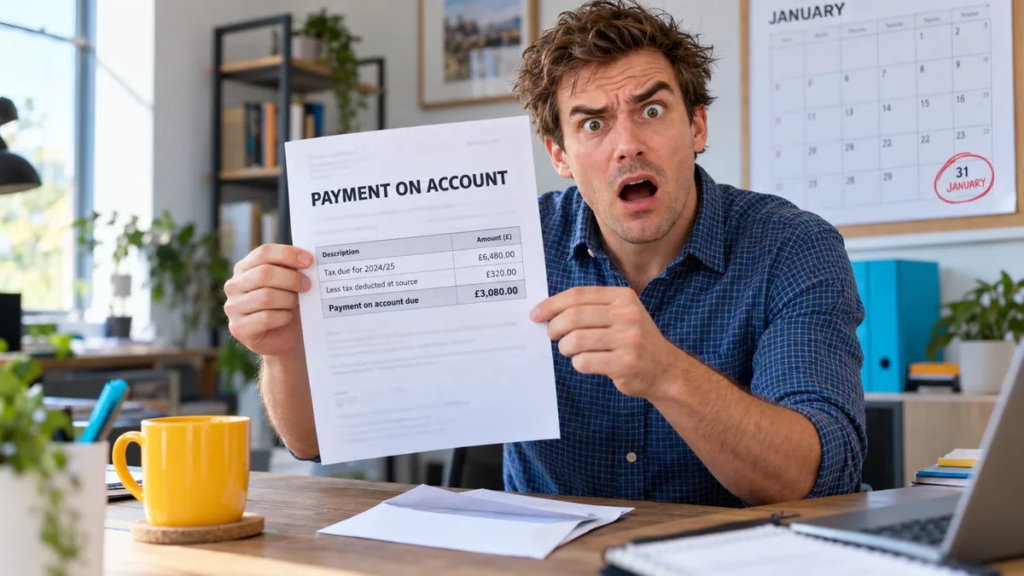
A newly self-employed person may pay the entire first-year balancing liability plus half as much again as the first payment towards the next year on 31 January. This is not double taxation: the extra amount is credited to the following year.
Cash planning still matters. Set aside a proportion of each receipt and update the forecast during the year. Do not wait for the return calculation to discover the combined January amount.
The amount can also rise after profits increase because payments based on the earlier year were too low, leaving a larger balancing payment.
What should you know about reducing payments on account?
If the next year's relevant liability is genuinely expected to be lower, the taxpayer can apply to reduce payments on account. Use current results, expected income, expenses and reliefs to calculate a reasonable reduction.
If reduced too far, HMRC charges interest on the shortfall from the original due date. A wish to preserve cash is not evidence that the liability will fall.
Review the reduction when circumstances improve and make a top-up payment promptly. Keep the forecast supporting the claim.
What should you know about late filing?
The ordinary late-filing regime begins with a £100 penalty after the deadline, even where no tax is due, with further penalties as delay continues. Special points-based rules apply as MTD for Income Tax is introduced; for 2026/27 HMRC has a specific easement for late quarterly updates, not for the final return.
If there is a reasonable excuse, appeal through the stated process with evidence and act promptly once the excuse ends. Disagreement with the tax bill is not a reason to leave the return unfiled.
File an accurate return as soon as possible. A provisional figure may be permitted in limited circumstances if clearly identified and corrected without delay.
What should you know about amending a return?
An online return can normally be amended within the statutory window. Keep a record of the original submission, correction and reason. A repayment claim or disclosure outside that window can require another process.
An amendment does not automatically suspend payment due under the filed position. Check the account and contact HMRC where the amount is disputed or changing.
What should you know about records and a practical calendar?
Keep sales, expenses, bank records, dividend vouchers, P60s, benefits, pension evidence, property statements and gains information. Self-employed record-retention rules can require records for at least five years after the 31 January submission deadline for the relevant year, with longer periods in some cases.
Set internal milestones: records complete, reconciliation, missing-information chase, draft calculation, approval, submission and cleared payment. Put payments on account into the cash forecast separately from VAT or other taxes.
See sole trader and landlord support for the relevant service page. Use the Deadline Finder for standard first accounts, first confirmation statement and Corporation Tax dates. For VAT, payroll, personal tax and other obligations, check the tax deadlines calendar and your official records.
What should you know about build a tax reserve?
Estimate tax from year-to-date profit and other income, then transfer a regular amount to a separate reserve. Recalculate after material changes rather than relying on a fixed percentage chosen at the start.
The reserve should include the possible first payment on account as well as the balancing bill. Keep VAT and payroll money separate so one liability does not consume funds for another.
What should you know about if records are incomplete?
List missing items, request duplicates and reconcile bank transactions. Do not omit income because an invoice is unavailable or claim an expense without evidence and business purpose.
Where a precise figure genuinely cannot be known by the filing date, HMRC allows provisional figures in limited circumstances. Identify them clearly, explain the basis, replace them promptly and pay additional tax and interest where due.
What should you know about after filing?
Save the return, computation and receipt. Compare HMRC's statement with payments already made and check that payments on account are correctly credited.
Update the next-year forecast using the filed result. A completed return should improve the cash plan, not disappear into an archive until the following January.
What should you know about keep personal and business dates distinct?
A sole trader's Self Assessment return reports business profit but is filed by the individual. VAT, PAYE and MTD updates have their own deadlines and payment references.
For a landlord with several properties, one personal return can contain the combined property business while MTD requires source-level digital processes. Map the obligations rather than assuming one submission completes all of them.
If HMRC changes a deadline or issues a specific notice, record it beside the standard calendar and keep the notice. The taxpayer's live account and formal correspondence take priority over a generic example.
What should you read next?
Use the Deadline Finder for standard first accounts, first confirmation statement and Corporation Tax dates. For VAT, payroll, personal tax and other obligations, check the tax deadlines calendar and your official records.
What do people also ask about this topic?
What should you know about registering for the first time?
A person newly required to file for 2026/27 should normally notify HMRC by 5 October 2027. This can apply to new self-employment, property income or another untaxed source.
What should you know about filing dates for 2026/27?
The 2026/27 tax year ends on 5 April 2027. The standard paper return must reach HMRC by 31 October 2027. The standard online return must reach HMRC by 31 January 2028.
What should you know about payment dates?
The balancing payment for 2026/27 is normally due by midnight on 31 January 2028. The first payment on account for 2027/28 may be due on the same day, and the second on 31 July 2028.
How payments on account work?
Each payment on account is usually half the previous year's Income Tax and Class 4 National Insurance liability that falls within the calculation. The two instalments are credited against the next year's final bill.
Which official sources support this guide?
- https://www.gov.uk/self-assessment-tax-returns/deadlines
- https://www.gov.uk/register-for-self-assessment
- https://www.gov.uk/understand-self-assessment-bill/payments-on-account
General guidance, not advice for your situation.