
Last reviewed: 29 September 2026 · Reviewed by IFM's qualified accountant
Both structures can employ people, register for VAT and operate substantial businesses. The important difference is the legal and administrative framework around the activity.
What is the legal difference between a sole trader and a limited company?
As a sole trader, you and the business are not separate legal persons. You make the decisions, own the assets, keep the profit after tax and are personally responsible for the business debts and obligations. Appropriate insurance can manage some risks, but it does not turn the business into a separate entity.
A limited company has its own legal identity. It can own assets, enter contracts, owe money and bring or face legal claims. Shareholders' financial exposure is normally limited to their investment, but limited liability is not absolute. Personal guarantees, wrongdoing, certain director failures and other facts can create personal exposure.
The company is run by one or more directors. A director has statutory duties and remains legally responsible for records, accounts and filings even when an accountant or another person handles day-to-day work.
How do you start as a sole trader?
A sole trader can begin trading without incorporating. GOV.UK says registration for Self Assessment as a sole trader is required if gross trading income is more than £1,000 in a tax year, or in certain other circumstances such as needing to prove self-employment, make voluntary Class 2 National Insurance payments, or register for the Construction Industry Scheme.
Records must be kept from the start of trading. They support the calculation of profit, the Self Assessment return and any VAT or MTD obligations.
The administrative structure is simpler than a company, but the underlying records still need care. A separate business bank account is not a legal separation in the company sense, yet keeping business and personal transactions apart is usually a much cleaner way to maintain evidence and understand performance.
How do you start a limited company?
A company must be registered with Companies House before it trades as a limited company. The formation process identifies its type, name, directors, shareholders or guarantors, people with significant control, official address, SIC code and constitutional documents.
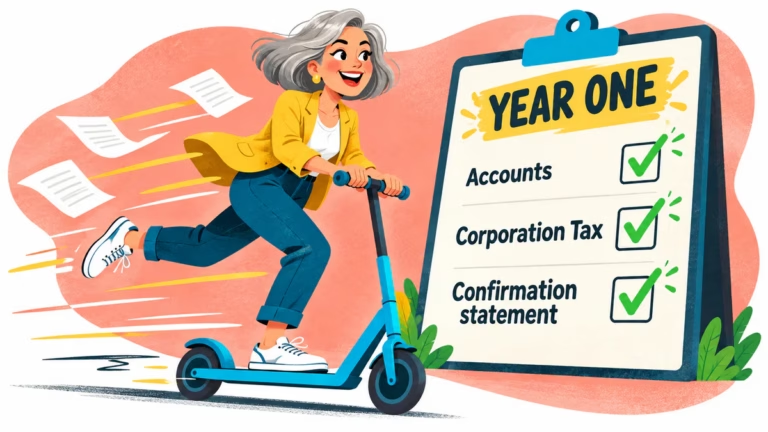
New directors and people with significant control have identity-verification responsibilities. The company then has continuing duties, including keeping company and accounting records, filing annual accounts, filing a confirmation statement and dealing with Corporation Tax.
Company money does not belong to the director personally. Salary, dividends, expense repayments, benefits and directors' loans have different rules and records. Treating the company bank account as a personal account can create tax, accounting and legal problems.
How does tax differ between the two structures?
A sole trader normally pays Income Tax on taxable business profit through Self Assessment and may have National Insurance obligations. The tax is based on profit, not simply the amount withdrawn from the business.
A company pays Corporation Tax on its taxable profits. A director or shareholder may also have personal tax and National Insurance consequences when value is taken out through salary, dividends, benefits, loans or another route.
That does not make one structure automatically cheaper. The result depends on profit, other income, extraction needs, reliefs, family or ownership arrangements, pension planning, timing and future tax changes. Administration and professional costs matter too.
Use calculations based on your expected figures and circumstances. A social-media rule such as “incorporate above this profit” is too crude to decide a legal structure.
What information becomes public?
A sole trader's business information is not placed on the Companies House register merely because the person is self-employed, although information can appear elsewhere through VAT, licensing, websites, directories or legal requirements.
A company has a public Companies House record. Its registered office, officers, filing dates, accounts and other information are available to the public. Directors supply a service address for the public record and a usual residential address held on a private register, subject to the statutory disclosure rules.
If privacy matters, choose addresses before incorporation. Using a home address as the registered office or service address can place it on the public register.
Which records and deadlines apply?
A sole trader normally works to the tax year for Self Assessment, although business records and accounting choices can still need adjustment. MTD for Income Tax now applies in phases to qualifying sole traders and landlords, bringing digital-record and quarterly-update duties for those within scope.
A company has a Companies House financial year, Corporation Tax accounting periods and a confirmation-statement review period. It may also have VAT, payroll and director personal-tax dates. These are separate obligations and should be calendared separately.
Companies usually create more administration, but that structure can be valuable where ownership, investment, succession or governance needs it.
How do funding and commercial needs affect the choice?
Some customers, tenders, landlords or funders prefer or require a limited company. A company can issue shares and bring in owners through a recognised structure, although the rights attached to shares and the documentation need care.
A sole trader can borrow, employ people and build a valuable business, but the business and owner remain legally connected. Transferring a sole-trader business into a company later may be possible, but assets, contracts, tax, VAT, employees and licences do not necessarily move automatically.
Which questions should you answer before choosing?
Consider:
- What could the business owe or be sued for?
- Will anyone else own part of it now or later?
- How much money must the owner take out, and when?
- Do customers or funders require a company?
- Is public filing acceptable?
- Can the business maintain company records and meet separate deadlines?
- Is a sale, investment or succession likely?
- What do current figures show after tax and administration are modelled properly?
The answers can point in different directions. A low-risk person testing an idea may value the simplicity of sole trading. A business with contracts, employees, outside investment or material risk may value separation and governance. Neither conclusion should be assumed without the facts.
Can you change business structure later?
GOV.UK notes that a business can change structure and that moving from sole trader to limited company is usually easier than the reverse. “Possible” does not mean frictionless. A change can involve asset transfers, new contracts, bank arrangements, payroll, VAT, registrations and tax consequences.
Plan the effective date and document what moves. Keep records that clearly separate the sole-trader period from the company period.
Keep a dated record of the decision and the assumptions behind it. Turnover, expected profit, personal drawings, risk, customers and funding can all change. Reviewing the structure when those facts change is more useful than treating the original choice as permanent.
What is the practical next step?
Write down the expected annual profit, personal drawings, business risks, intended owners and the next two years of plans. Compare the structures using those facts, then take advice where the tax, legal or ownership result is material.
Explore limited company services or sole trader support once the structure is clear.
Use the Deadline Finder for standard first accounts, first confirmation statement and Corporation Tax dates. For VAT, payroll, personal tax and other obligations, check the tax deadlines calendar and your official records.
What should you read next?
Use the Deadline Finder for standard first accounts, first confirmation statement and Corporation Tax dates. For VAT, payroll, personal tax and other obligations, check the tax deadlines calendar and your official records.
What do people also ask about this topic?
Is it better to be a sole trader or limited company?
Neither structure is always better. Sole trading is usually simpler and keeps the owner and business legally together. A company creates a separate legal person, public filing duties and rules for taking money out. Compare expected profit, risk, customers, ownership plans and administration before deciding.
At what profit should I become a limited company?
There is no official profit threshold that makes incorporation automatically worthwhile. Tax depends on other income, salary, dividends, pension contributions, associated costs and how much cash must be withdrawn. Model the full position using current rates instead of relying on an old turnover or profit rule of thumb.
Can I change from sole trader to limited company later?
Yes. A sole trader can incorporate later, but contracts, assets, VAT, payroll, licences and bank arrangements do not always transfer automatically. Choose an effective date, document what moves to the company and keep records that clearly separate the sole-trader period from company transactions.
Can a sole trader employ staff?
Yes. A sole trader can employ staff and may need to register as an employer, operate PAYE, provide workplace pensions and meet employment-law duties. Employing people does not require a limited company, although liability, funding and commercial considerations may still influence the preferred business structure.
Which official sources support this guide?
- https://www.gov.uk/set-up-business
- https://www.gov.uk/become-sole-trader
- https://www.gov.uk/running-a-limited-company
General guidance, not advice for your situation.